
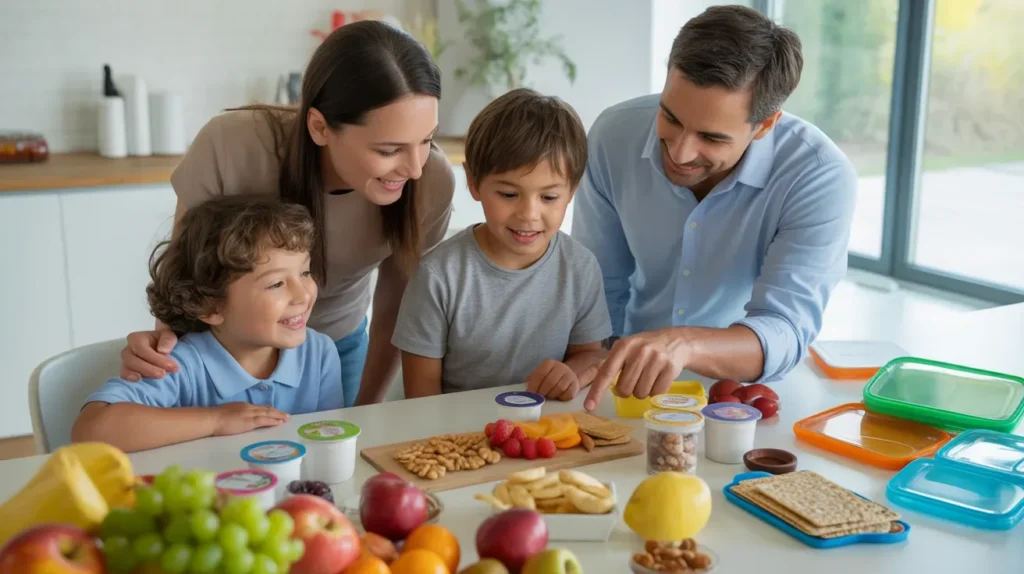
Let’s be honest. Most advice about kids snacks for school sounds great in theory, but falls apart the moment your child refuses to touch anything green. This guide is different. It is built around what actually works, what kids will actually eat, and how schools and families together can make healthy snacking feel natural rather than forced.
- 1 in 3 children skip their school lunch.
- 20% drop in focus without a mid-day snack.
- 2 times the better mood in kids with balanced snack intake.
Why Getting Kids Snacks for School Right Is Worth the Effort
A snack is not just food. For a child sitting through a six-hour school day, it is a reset button. Blood sugar dips after two to three hours, and when it does, concentration goes with it. The right snack at the right time can bring a tired child back to full attention without the sugar crash that follows a candy bar. The tricky part is variety. Children are creatures of habit, but also quickly bored. A banana that worked great in September might be rejected by November. The goal is to build a rotation of snacks that are nutritious, convenient, and varied enough to keep things interesting.
Quick Tip for Parents:
Involve your child in picking snacks from a curated shortlist. Research shows children eat 40% more of the food they helped choose. Give them two or three options, not an open-ended choice.
Building the Ideal Healthy Kids Snacks for School Lunch
There is a simple formula that works across almost every age group. Think of it as the “anchor and boost” method. The anchor is the filling element, something with protein or healthy fat. The boost is the energy element, a fruit, a whole grain, or a vegetable. Together, they provide sustained energy without an afternoon crash.
Examples of healthy kids snacks for school lunch using the anchor and boost method:
Cheese + Grapes:
Protein anchor with a natural sugar boost. Easy to portion and pack.
Hummus + Pita Triangles:
Plant protein with complex carbs. Keeps well for hours.
Hard-boiled egg + apple:
High satiety combo. Great for kids who are active at recess.
Nut butter + rice cakes:
Allergy-friendly in most schools. Light, crunchy, and filling.
Quick and Nutritious Kids’ Snacks for School You Can Prep the Night Before
Morning chaos is real. The best way to avoid grabbing something processed in a rush is to prep the night before. Here are some quick and nutritious kids’ snacks for school that take under ten minutes to prepare:
- Overnight oat cups in small mason jars with berries and a drizzle of honey.
- Pre-portioned trail mix in reusable zip bags (oats, sunflower seeds, dried cranberries).
- Sliced cucumber and cherry tomatoes with a small pot of cream cheese.
- Frozen yogurt tubes (packed frozen, thawed by snack time).
- Mini whole wheat muffins were baked in batches on Sunday.
The Best Homemade Kids Snacks for School: Three Recipes That Actually Travel Well
Homemade snacks often beat store-bought on both nutrition and cost. Here are the best homemade kids’ snacks for school that hold up well in a lunchbox:
- Banana oat energy balls: Mix 2 mashed bananas, 1 cup rolled oats, 2 tbsp peanut butter, and a handful of mini chocolate chips. Roll into balls and refrigerate overnight. No baking needed.
- Savory cheese muffins: Mix 1.5 cups of flour, 1 cup of shredded cheddar, 1 egg, half a cup of milk, and a pinch of paprika. Bake at 180°C for 18 minutes. Light, savory, and protein-rich.
- Veggie pinwheels: Spread cream cheese on a whole wheat tortilla, layer with spinach and shredded carrot, roll tightly, and slice into rounds. Fun to eat and packed with nutrients.
How Community Involvement in Schools Is Driving Positive Change
Good snacking habits are not enforced. They are taught in the home, just as they say that HOME is the first school for a kid. And sometimes it’s not enough, and that’s where community involvement in schools comes into play. From parent-led nutrition workshops to local farmer partnerships that bring fresh produce directly into school cafeterias, communities are reshaping what healthy eating looks like inside school walls.
These initiatives are not happening by chance. Many schools are now using strategies for community involvement in schools that are designed to bridge the gap between home and school. Some of the most effective strategies include:
- Parent volunteer programs in school kitchens and cafeterias
- Local business sponsorships for healthy snack programs
- School garden projects where students grow their own food
- Monthly “nutrition assembly” events led by community health workers
When families and communities apply consistent strategies for community involvement in schools, the results are clear. Children are more willing to try new foods, more aware of nutrition, and more likely to carry healthy habits into adulthood.
The California Community Schools Partnership Program: A Model Worth Following
One of the most talked-about examples in the United States is the California Community Schools Partnership Program. This state-funded initiative supports schools in becoming full-service community hubs, where health, nutrition, mental wellness, and family engagement all come together under one roof.
Schools participating in the California Community Schools Partnership Program have reported improvements in student attendance, better nutritional awareness among students, and stronger parent engagement. The model proves that when a school is supported by its broader community, students thrive in more ways than just academically.
This kind of community involvement in schools can serve as a blueprint for districts everywhere, not just in California. Schools that adopt a similar community-first model tend to see higher participation in health programs, including school snack initiatives.
Conclusion
Sending your child to school with the right kids snacks for school is one of the simplest and most impactful things a parent can do. It does not require expensive products or hours in the kitchen. It requires intention, a little planning, and the knowledge that what your child eats between lessons shapes how they learn, feel, and grow. And when schools, parents, and communities work together on this, the impact multiplies. Start with one new snack this week and build from there.
Frequently Asked Questions
Q1. What are the most practical kids snacks for school for picky eaters?
Start with familiar textures and mild flavors. Cheese cubes, plain crackers, apple slices, and yogurt pouches are safe starting points. Introduce one new item per week alongside something they already like.
Q2. How does community involvement in schools improve children’s eating habits?
When children see food-related activities as a community event rather than a school rule, they engage more willingly. Garden projects, cooking demos, and parent-led workshops all create positive associations with healthy food.
Q3. Are store-bought snacks ever a good option for busy mornings?
Yes, when chosen carefully. Look for snacks with fewer than five ingredients, no added colors, and less than 8g of sugar per serving. Many clean-label brands now offer school-safe options that are genuinely nutritious.
Q4. What makes the California Community Schools Partnership Program different from regular school programs?
It integrates health, nutrition, family support, and mental wellness into one coordinated model rather than treating each as a separate program. This holistic approach creates more consistent outcomes across all areas of student wellbeing.
Q5. How early should children be taught about kids snacks for school and nutrition?
As early as age four or five, children can begin to understand simple concepts like “energy foods” and “growing foods.” Framing nutrition in terms they can visualize makes the message stick far better than health lectures.